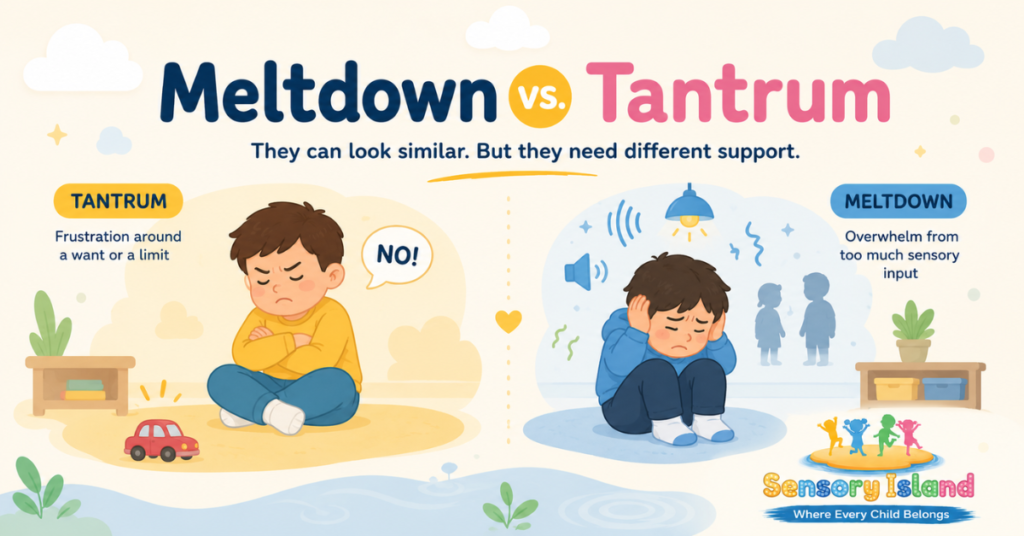
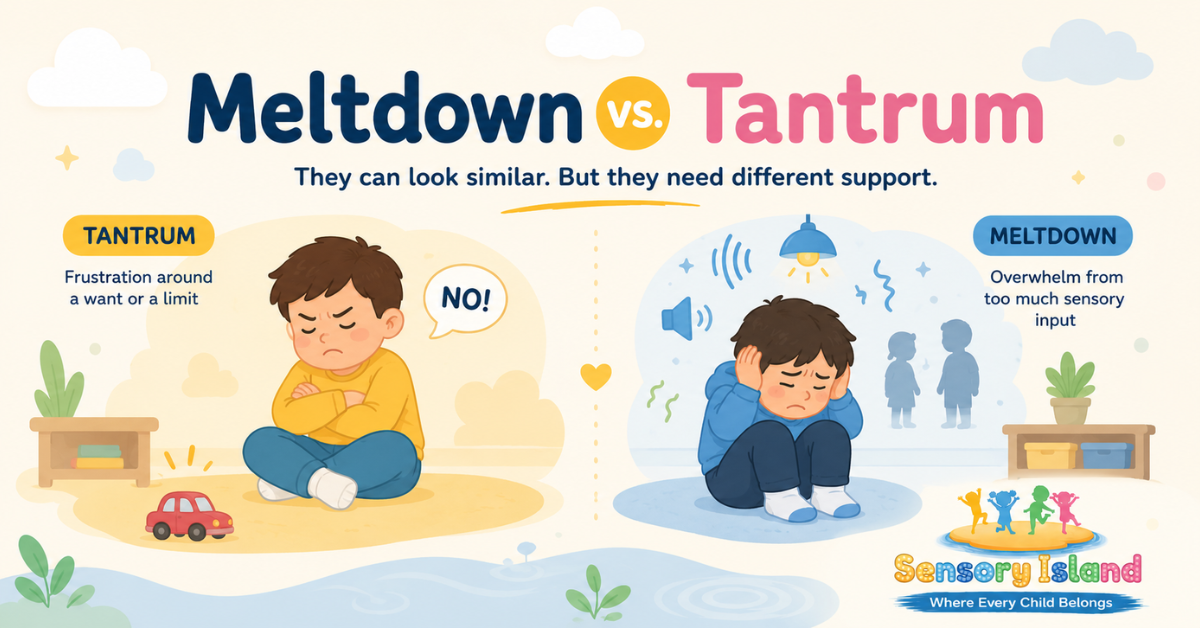

Quick Answer: A tantrum is a behavior. A meltdown is a neurological event. Tantrums happen when a child wants something and does not get it. They are goal-directed and usually stop when the goal is met or the child calms down. Meltdowns happen when a child’s nervous system becomes completely overwhelmed. They are not a choice; they cannot be “stopped,” and they often leave the child exhausted afterward. Understanding the difference changes everything about how you respond and how your child feels during their hardest moments.
Every Parent Has Been There
Your child is on the floor of the grocery store. They are screaming, crying, their bodies stiff, or maybe it is the opposite, completely limp. Nothing you say is reaching them. Nothing is working. And somewhere in the back of your mind, in that exhausted and overwhelmed place, you wonder: is this a meltdown or a tantrum? Does it even matter? What am I supposed to do right now? It matters enormously, because the way you respond to a meltdown is almost the opposite of how you respond to a tantrum. Responding the wrong way, even with the best intentions, can make things much, much harder for your child. So let’s slow this down. Let’s talk about what is actually happening in each situation, and let’s make sure
you know exactly what to do.
What Is a Tantrum?
A tantrum is a behavior. It is something a child does, often intentionally, when they want something they cannot have, or when they are frustrated that things are not going their way. Tantrums are a completely normal part of child development. They typically peak between ages one and three, though they can happen in older children too. Here is the most important thing to understand about tantrums: a child having a tantrum is still in control. They may not look like it, but somewhere in that behavior, there is a goal. They want the toy. They want
to stay at the park. They do not want to eat the vegetables. The behavior is aimed at getting a result.
This means a few things:
- The child is aware of their audience
- The behavior often changes based on who is watching
- It usually stops or dramatically reduces when the goal is met or when the child realizes it is not working
- The child can be reasoned with, at least a little
Tantrums are not fun, but they are manageable, and they respond well to clear, calm, consistent boundaries.
What Is a Meltdown?
A meltdown is something completely different. A meltdown is not a behavior. It is a neurological event.
It happens when a child’s nervous system becomes so overwhelmed by sensory input, emotion, change or stress that it simply shuts down or explodes. The brain’s ability to regulate goes offline. There is no goal. There is no audience awareness. There is no choice.
The child is not in control during a meltdown. This is the most critical thing to understand. A child in the middle of a meltdown is not throwing a fit to get something. They are not manipulating you. They are not being dramatic. They are genuinely drowning in their own nervous system, and they cannot swim their way out on their own.
Meltdowns are most common in autistic children and children with sensory processing differences, but any child can have a meltdown under the right conditions. The difference is that for sensory-sensitive and neurodivergent children, the threshold for overwhelm is lower, and the recovery takes longer.
The Key Differences
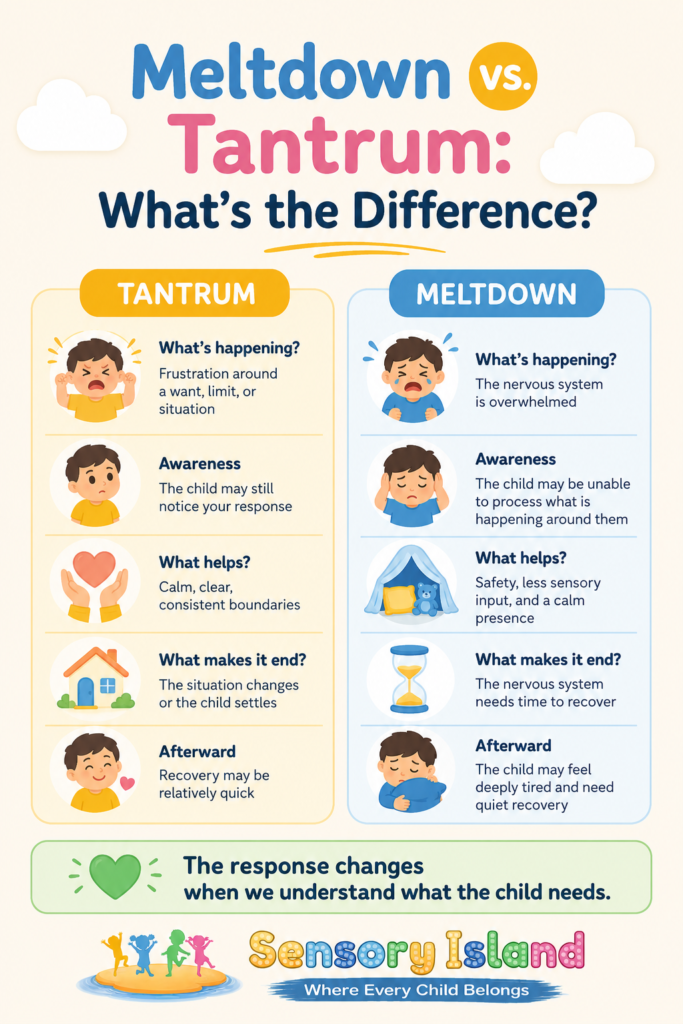
Here is a simple breakdown of how these two things compare:
Before it happens: A tantrum often has a clear trigger, a denied request, a transition or a frustration. A meltdown often builds up over time from accumulated sensory input, emotional stress or a change in routine. By the time the meltdown starts, the cup is already overflowing.
During the moment: During a tantrum, the child is often watching for a reaction. They may pause, check your face, or change their behavior based on what you do. During a meltdown, the child is completely unreachable. They cannot process language well. They cannot make decisions. Eye contact and reasoning do not help and can make things worse.
What makes it stop: Tantrums stop when the goal is met, when the child gets attention, or when they eventually calm themselves down. Meltdowns stop when the nervous system has discharged enough, not when the goal is met, because there is no goal. You cannot talk your child out of a meltdown.
After it is over: After a tantrum, children typically bounce back relatively quickly. After a meltdown, children are often completely exhausted, emotionally and physically drained. They may be embarrassed, confused, or not even fully remember what happened. They need time, quiet and gentleness to recover.
Why Does This Difference Matter So Much?
Because the response that works for a tantrum can make a meltdown catastrophically worse.
If you try to set firm limits and hold boundaries during a meltdown, the way you might with a tantrum, you are adding more input to a nervous system that is already past its limit. You are pouring water into a cup that is already overflowing.
If you ignore a meltdown the way you might ignore a tantrum, you are leaving a child alone in their most overwhelming moment when what they need most is a calm, safe, regulated presence nearby. And if you try to reason with a child mid-meltdown, explaining, negotiating, asking them to use their words, you are asking a brain that has lost its language capacity to do something it literally cannot do right now.
Getting this wrong does not make you a bad parent. No one teaches us this. But getting it right changes everything.
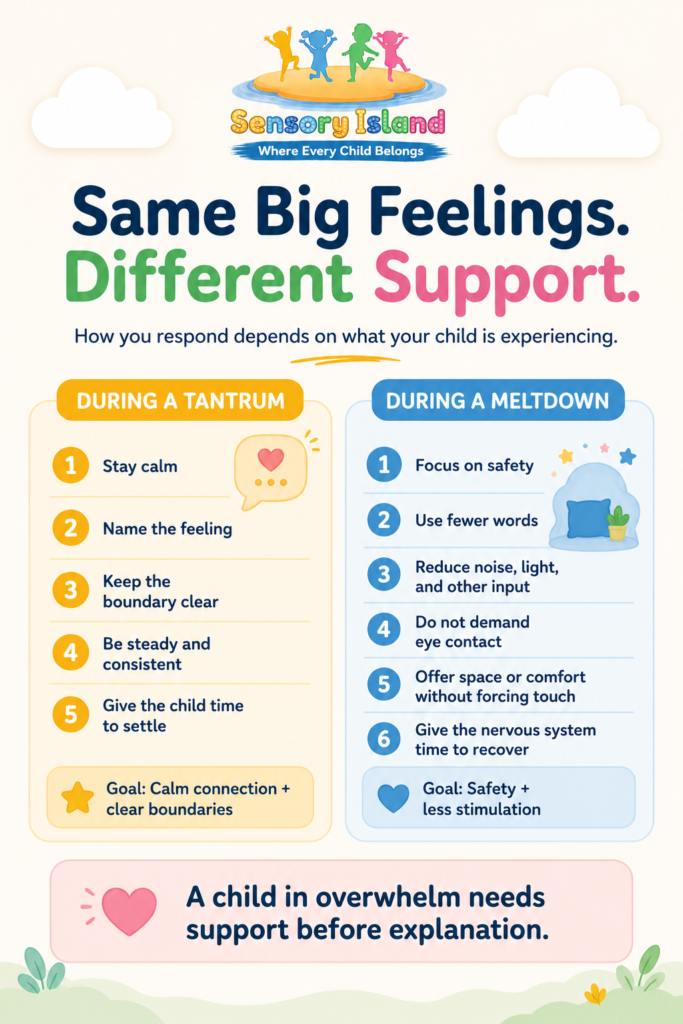
How to Respond to a Tantrum
When you are dealing with a tantrum, your goal is to stay calm and consistent.
Stay calm. Children escalate to match adult energy. If you get loud, they get louder. If you stay regulated, they are more likely to come down.
Do not give in to the behavior. If your child is screaming for candy and you give it to them to stop the screaming, the message is: screaming gets me candy. The tantrum will come back stronger next time.
Acknowledge the feeling, not the demand. You can say: “I know you are really upset that we have to go. That is hard.” You are not agreeing with the behavior. You are naming the emotion underneath it.
Hold the boundary calmly and consistently. The boundary does not have to be harsh. It just has to be clear and steady.
Wait it out. Tantrums run out of fuel when they stop getting a reaction. Stay present, stay calm and let it pass.
How to Respond to a Meltdown
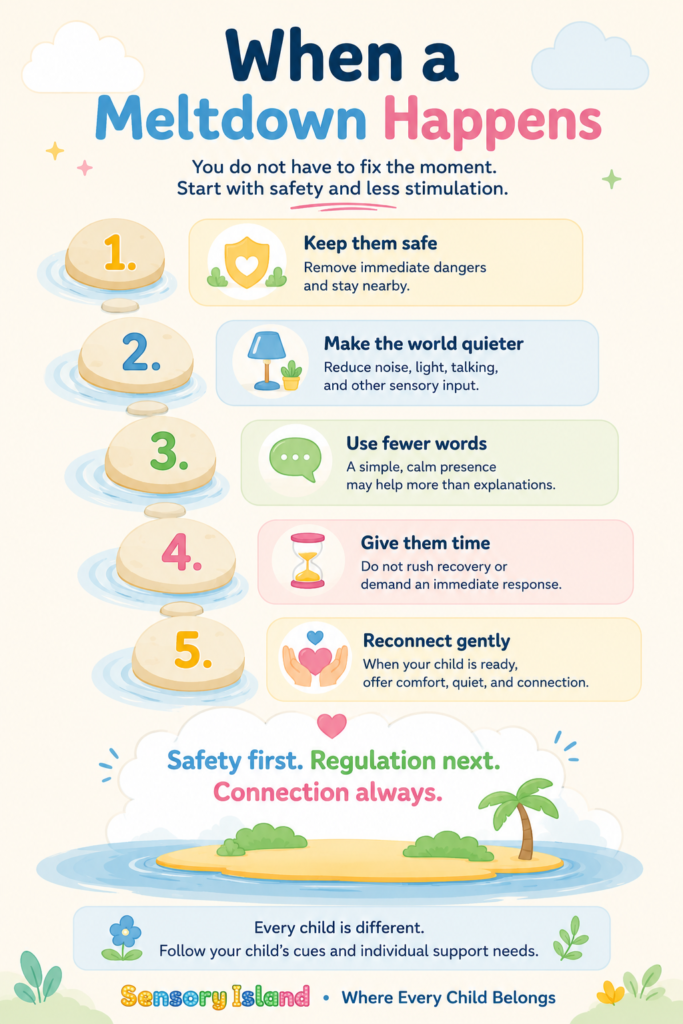
When you are dealing with a meltdown, everything shifts. Your goal is not to stop the meltdown. Your goal is to keep your child safe and reduce stimulation while their nervous system comes back online.
Lower your voice or go silent. Too much talking adds more sensory input. Sometimes the most powerful thing you can do is say nothing and simply be present.
Get to their level. Kneeling, sitting on the floor nearby, communicates safety without crowding them.
Reduce sensory input. If you can, move to a quieter place. Turn off loud noises. Dim lights if possible. The nervous system needs less, not more.
Do not demand eye contact. During a meltdown, forced eye contact can feel threatening and overwhelming. Let them look away.
Do not try to reason or explain. Their brain cannot process language well right now. Save the conversation for after they are calm and regulated again.
Stay close, but do not force touch. Some children find touch grounding during a meltdown. Others find it unbearable. Read your child. Offer, do not force.
Wait. This is hard, but the meltdown has to run its course. You cannot rush it. You can only be a calm, safe presence while it does.
After the meltdown, reconnect gently. Once your child has come back down, offer comfort without judgment: a hug, a quiet moment, their favorite drink or snack. Do not lecture or explain what went wrong. Just reconnect. That conversation can come much later when both of you are truly calm.
“But How Do I Know Which One It Is in the Moment?”
This is the question every parent asks, and it is a fair one. Here are the fastest ways to tell:
Is your child aware of you? If they are watching your reaction, they are more likely in tantrum territory. If they seem unreachable, like you are not even there, it is more likely a meltdown.
Did something get denied or frustrated? If there is a clear, immediate trigger like a denied request, it may be a tantrum. If the trigger seems small relative to the reaction, or if you cannot identify a trigger at all, it is more likely a meltdown from a buildup of accumulated stress.
Can they respond to you at all? Try saying something simple and calm. If they can engage even minimally, you may have a tantrum. If they truly cannot respond, it is a meltdown.
What does their body look like? Tantrums often have a performative quality; the child may be watching you between sobs. Meltdowns often involve the body going into a completely different state: rigid, collapsed or completely unreachable.
You will also learn your own child over time. Every child has patterns. Parents who pay attention, as you clearly do, learn to read the early warning signs before the meltdown fully hits.
The Warning Signs Before a Meltdown
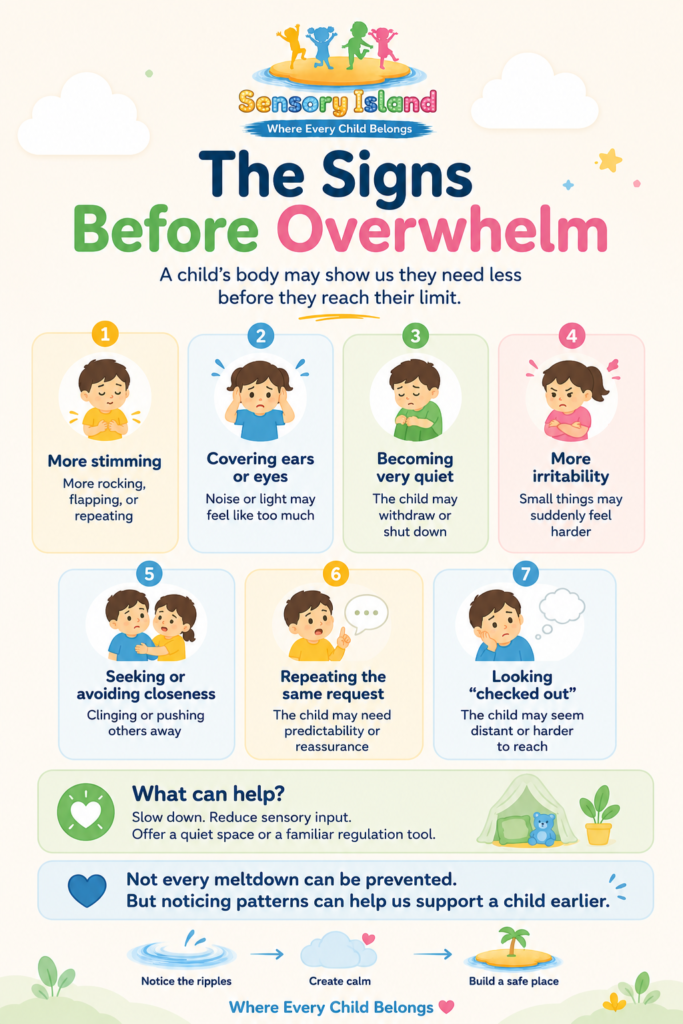
Meltdowns rarely come out of nowhere. They build.
Learning your child’s early warning signs gives you a chance to step in before the nervous system is completely overwhelmed, with a sensory break, a quiet space, a reduction in stimulation, or a regulation tool like deep pressure or movement.
Common early warning signs include:
- Increased stimming (more rocking, flapping or repeating)
- Covering ears or eyes
- Becoming unusually quiet or withdrawn
- Increased irritability or sensitivity to small things
- Clinginess or pushing you away
- Asking for the same thing over and over
- A glazed or “checked out” expression
When you see these signs, slow down. Give your child space to regulate before it becomes a full meltdown. That is not always possible, but when it is, it makes an enormous difference.
Why regulation comes before learning
A Word About the People Watching
One of the hardest parts of a public meltdown is the stares. The strangers who glance over. The people who murmur. The moments when you feel like everyone in the store is judging you and your child.
Here is what we want you to hold onto in those moments: your child is not bad. You are not bad. This is a neurological event, not a parenting failure.
You do not owe anyone an explanation. You do not have to justify your child’s nervous system to a stranger in a grocery store. Your only job in that moment is to keep your child safe and be their calm.
And when you get to the car or home, or wherever your safe place is, you are allowed to fall apart for a second. You are allowed to be tired. You are allowed to need support too.
Because this is hard, and you are doing it anyway. Every single day.
You Do Not Have to Figure This Out Alone
Understanding the difference between meltdowns and tantrums is just the beginning. Learning your child’s specific patterns, triggers and regulation tools takes time and real support. At Sensory Island, founded by Dr. Ralu Onubogu through the Toby Onubogu Foundation Inc. and located at 897 The Arches Circle, Tanger Outlets, Deer Park, N.Y. 11729, our team works with families every day to better understand each child’s sensory needs and develop practical strategies that truly help. Our occupational therapists, speech therapists and support staff understand what families experience firsthand, and they are here to support you every step of the way.
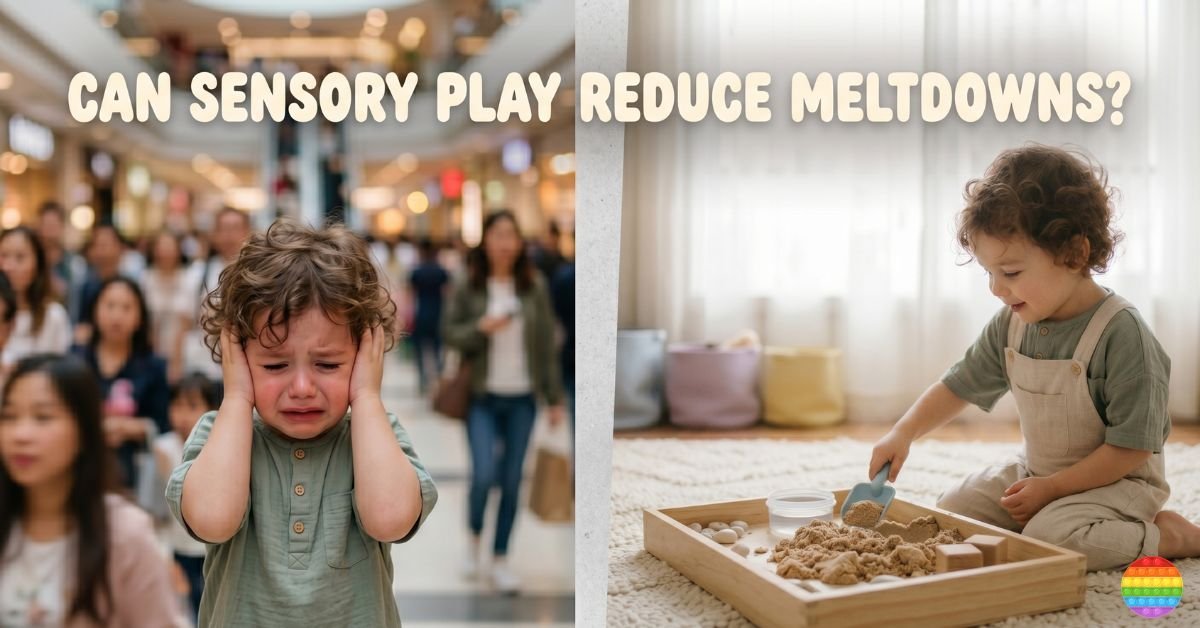
How sensory play may help reduce meltdowns
Learn more about support at Sensory Island →
Frequently Asked Questions
Can a child have both a meltdown and a tantrum at the same time?
Not exactly at the same time, but a tantrum can escalate into a meltdown if the child becomes so distressed that their nervous system gets overwhelmed. This is especially common in sensory-sensitive children. Watch for the moment when the child seems to go from “aware and reactive” to “completely unreachable,” that is often the shift from tantrum to meltdown.
My child is eight years old and still has meltdowns. Is that normal?
Yes. Meltdowns are not just a toddler thing. Older children and even adults can experience meltdowns, especially those who are autistic or have sensory processing differences. As children grow, they often develop more regulation tools, and the meltdowns may become less frequent or intense, but the age of a child does not determine whether meltdowns are possible.
Should I talk to my child about the meltdown afterward?
Yes, but timing matters. Do not discuss it during or immediately after the meltdown. Wait until your child is fully calm, regulated and rested. Then have a brief, gentle conversation, not to lecture, but to understand what happened and explore what might help next time. Keep it short and kind.
Is it OK to hold my child during a meltdown?
It depends entirely on your child. Some children find deep pressure or a tight hug calming during a meltdown. Others find any touch unbearable when overwhelmed. Follow your child’s lead. Offer gently, do not force. An occupational therapist can help you figure out what kind of physical input is right for your specific child.
Does ignoring a meltdown make it stop faster?
No, and this is an important distinction from tantrums. Ignoring a meltdown does not help the child’s nervous system recover. What helps is reducing sensory input, staying calm and present nearby, and waiting without adding more stimulation. The child needs a regulated adult close to them, not to be left alone.
How long do meltdowns usually last?
It varies widely. Some meltdowns last a few minutes. Others can last 20 to 45 minutes or longer. The duration depends on the child, the intensity of the trigger, the environment, and how regulated the adults around them are. Over time, with consistent support and sensory strategies, many children experience shorter and less intense meltdowns.
Can occupational therapy help reduce meltdowns?
Yes. Occupational therapy, especially sensory integration therapy, can significantly help children build regulation skills, identify their sensory triggers, and develop tools to manage overwhelm before it becomes a full meltdown. At Sensory Island, our OT program is designed specifically to support children with sensory processing differences and their families.