
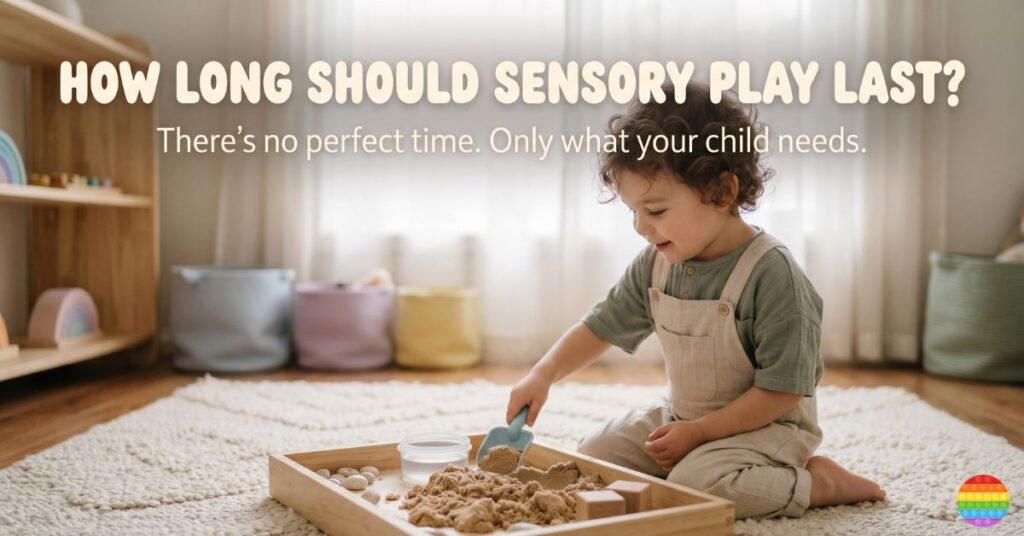

“How long should sensory play last?” If you’ve ever asked this, you’re not alone. Many parents wonder if they are doing too little… or too much. But here’s the truth: Sensory play is not about time. It’s about how your child feels. This guide will help you understand sensory play duration, what really matters, and how to follow your child’s needs with confidence.
What You Need to Know
Sensory play has no fixed time limit. The right length depends on the child’s nervous system, sensory needs, and energy level. Short or longer sensory play sessions are both appropriate if they help the body feel calm, safe, and regulated.
Why Parents Worry About Sensory Play Time
Many parents quietly worry:
- “Am I doing enough sensory play?”
- “Is this taking too long?”
- “Should we be doing something more productive?”
These worries are completely normal. But they come from one misunderstanding:
👉 Sensory play is not separate from learning.
👉 Sensory play prepares the brain for learning.
(You may also want to read: Regulation Before Learning)
What Matters More Than Time (H2)
The real question is not: “How long should sensory play last?”
It is: “Is this helping my child regulate?”
You’ll know sensory play is working when:
- Breathing slows
- Muscles relax
- Movements become smoother
- Emotions feel softer
- Focus improves
Sometimes this happens in 5 minutes. Sometimes it takes longer. Both are okay.
Typical Sensory Play Duration (Guidelines, Not Rules)
Every child is different, but here are general patterns:
Toddlers
5–10 minutes at a time. Short and frequent works best
Preschoolers
10–20 minutes. They may come and go from play
School-Age Children
15–30 minutes. Especially before or after hard tasks
The right sensory play time depends on the child, not just age.
Why Sensory Play Time Changes Every Day
Sensory needs are not the same every day. They change based on:
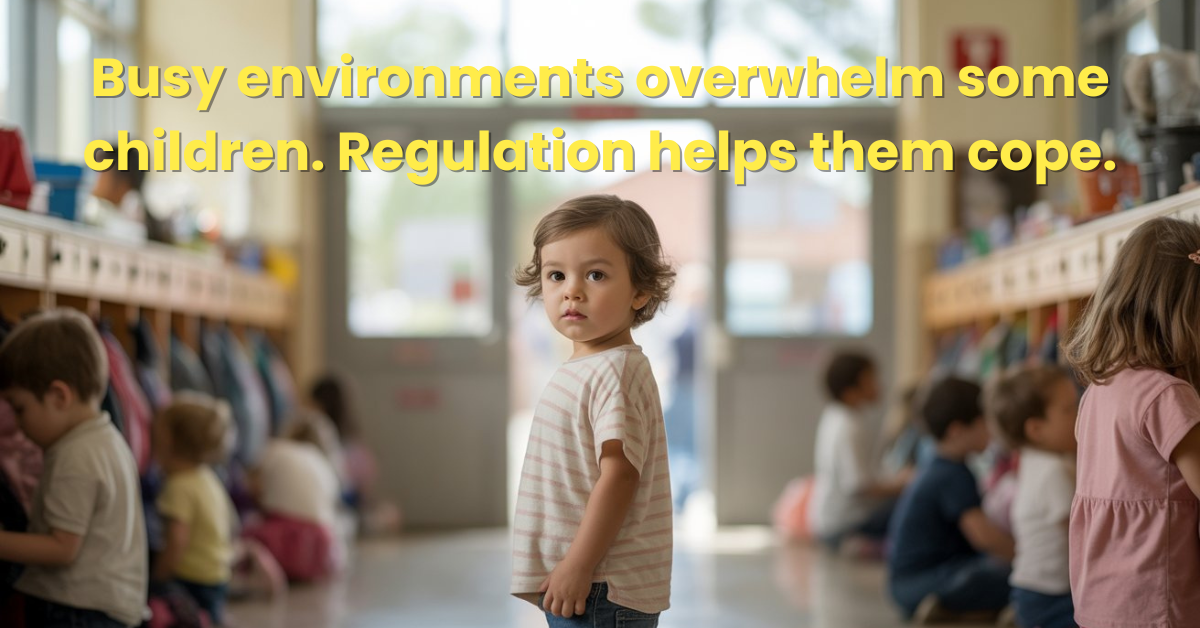
- Busy environments (read: How Busy Environments Impact Children)
- School demands
- Social interactions
- Sleep and energy levels
This is why comparison doesn’t work.
Signs Sensory Play Is Helping
Look for:
- A calmer body
- Slower movement
- Better attention
- Easier transitions
These are signs of regulation.
Signs It’s Time to Stop
Stop or switch when you see:
- Frustration
- Faster breathing
- Avoidance
- Loss of interest
Stopping is not failure. It means you’re listening.
Is Sensory Play Replacing Learning?
No.
Sensory play supports learning.
- A calm body can focus
- A safe child can explore
- A regulated brain can learn
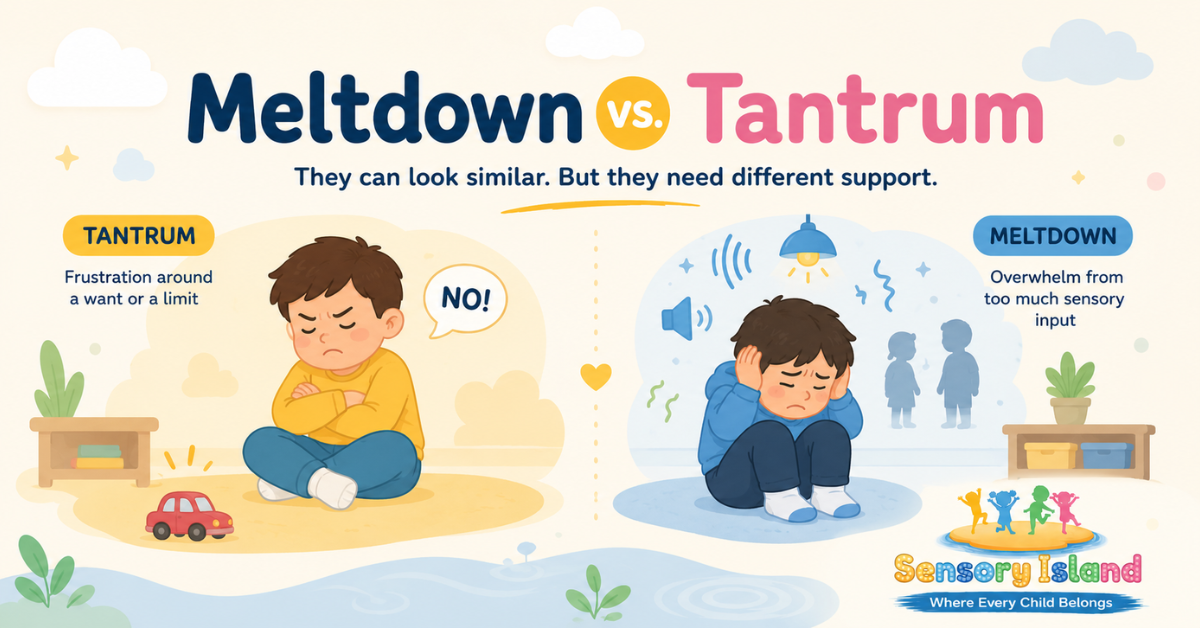
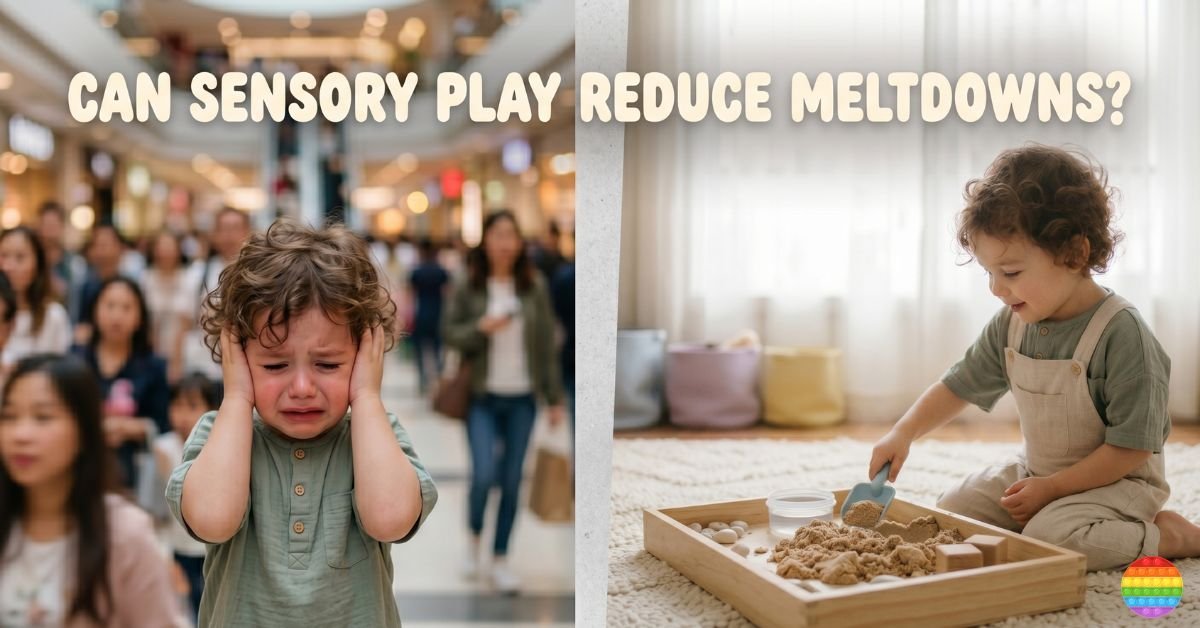
(Also read: Can Sensory Play Reduce Meltdowns?)
How to Use Sensory Play During the Day
You don’t need long sessions. Use it in small moments:
- Before homework
- After school
- During transitions
- As short breaks
Small moments still work.
Sensory Play Looks Different for Every Child
Some children need:
- Movement
- Deep pressure
- Tactile play
- Visual calm
The type of input often matters more than time.
Why Sensory-Friendly Spaces Matter
Busy environments can overwhelm children quickly.
Sensory-friendly spaces:
- Reduce overload
- Feel predictable
- Allow safe movement
(Explore: Top Sensory-Friendly Activities in New York)
Sensory Island: A Regulation-First Space on Long Island
Sensory Island, opening Spring 2026 on Long Island, is designed around one idea:
👉 Regulation comes first.
Children can:
- Play at their own pace
- Take breaks anytime
- Move freely without pressure
Key Takeaway
There is no perfect time for sensory play. The right amount is:
- What helps your child feel calm
- What supports regulation
- What prepares them to learn
Final Thoughts for Parents
Instead of watching the clock… Watch your child. Because sensory play is not about minutes. It’s about safety, connection, and balance.
FAQs
How long should sensory play last each day?
There is no fixed time. It can be a few minutes or longer, depending on your child’s needs.
Can sensory play be too long?
Only if the child becomes overwhelmed or disengaged should you follow their cues.
Is 5 minutes of sensory play enough?
Yes. Even short sessions can help with regulation.
Should sensory play be scheduled?
It can help, but flexibility is more important.