
Modern life is loud. Fast. Bright. Constant. For many children, this feels normal. For sensory-sensitive and neurodivergent children, it can feel overwhelming. Parents often notice it in everyday moments:
- Meltdowns after school
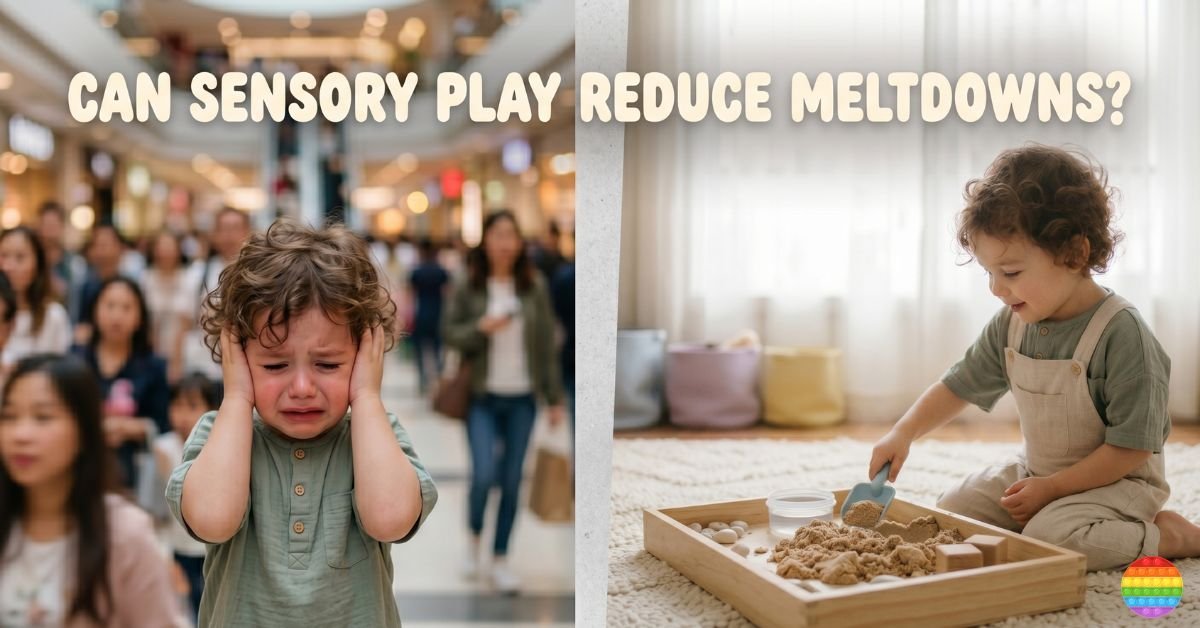
- Sudden shutdowns in busy stores
- Anxiety in restaurants
- Difficulty settling after birthday parties
- Resistance after long car rides
This isn’t because a child is misbehaving. It’s because their nervous system is working overtime. In this guide, we explain how busy environments affect sensory-sensitive children, why it happens, and how families can support regulation in everyday life.
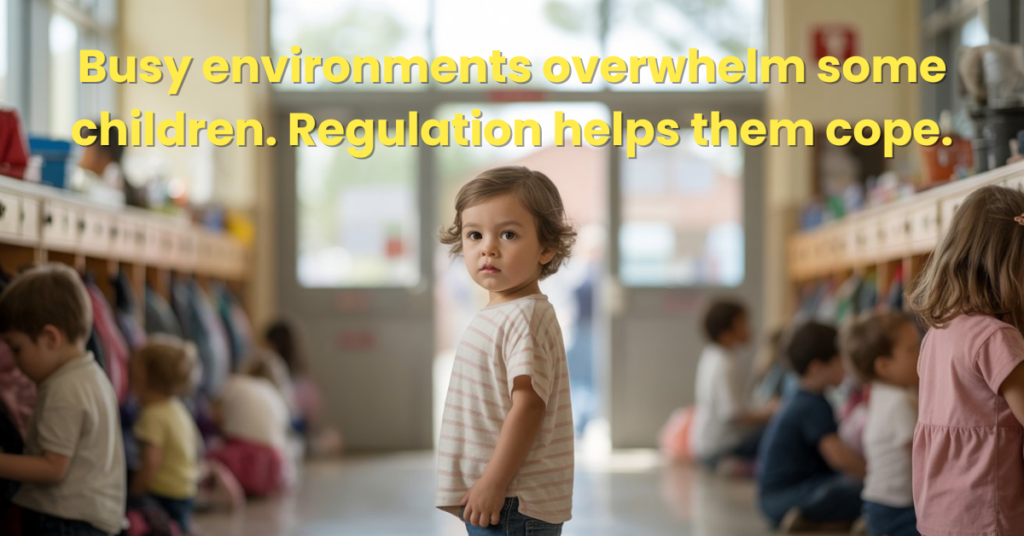
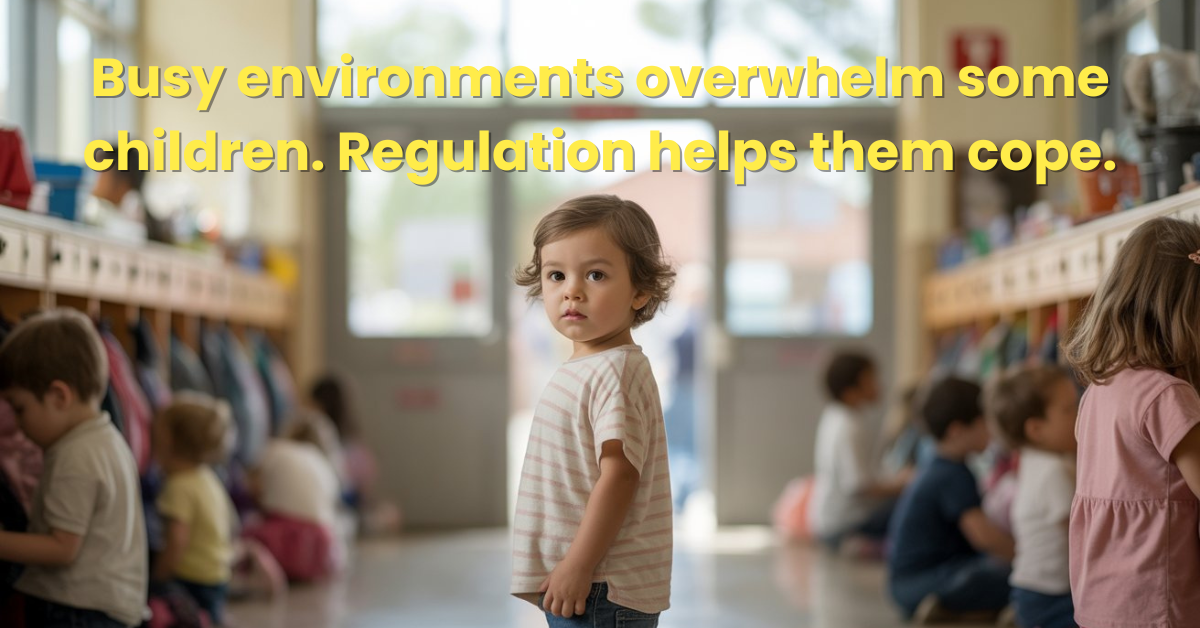
Busy environments such as schools, malls, restaurants, car rides, and crowded public spaces can overwhelm sensory-sensitive and neurodivergent children. Constant sensory input increases nervous system stress, making regulation harder. Predictable routines, sensory breaks, and calm environments help children feel safe and balanced.
What Does “Sensory-Sensitive” Mean?
Sensory sensitivity means a child’s nervous system processes input more intensely. This can include:
- Sounds feel too loud
- Lights feeling too bright
- Movement feeling too fast
- Touch feeling uncomfortable
- Crowds feeling unsafe
A sensory-sensitive child is not choosing to react strongly. Their body is responding to too much input at once.
Why Busy Environments Affect Some Children More
The brain’s first job is safety. In busy environments, the nervous system constantly asks:
- Is this safe?
- Is this too much?
- Do I need to protect myself?
For sensory-sensitive children, everyday places can trigger a stress response, even when there is no danger.
When the nervous system feels overloaded:
- Focus becomes difficult
- Emotions rise quickly
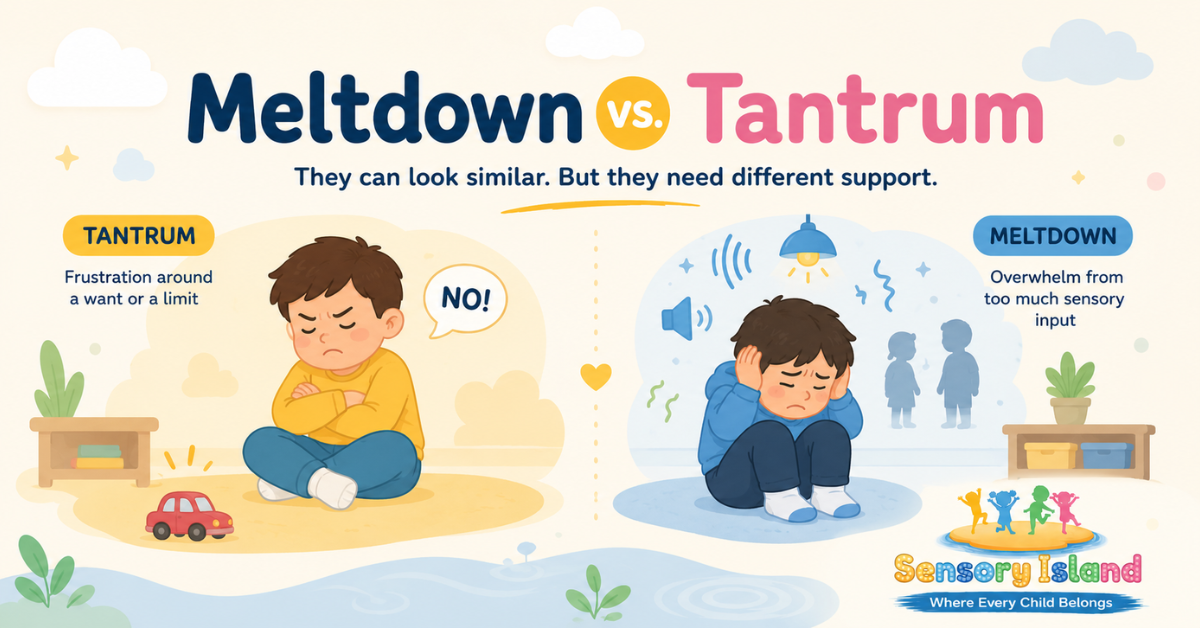
- Meltdowns or shutdowns may happen
- Learning and communication feel harder
This is not a behavior issue. It’s a nervous system response.
Everyday Environments That Can Feel Overwhelming
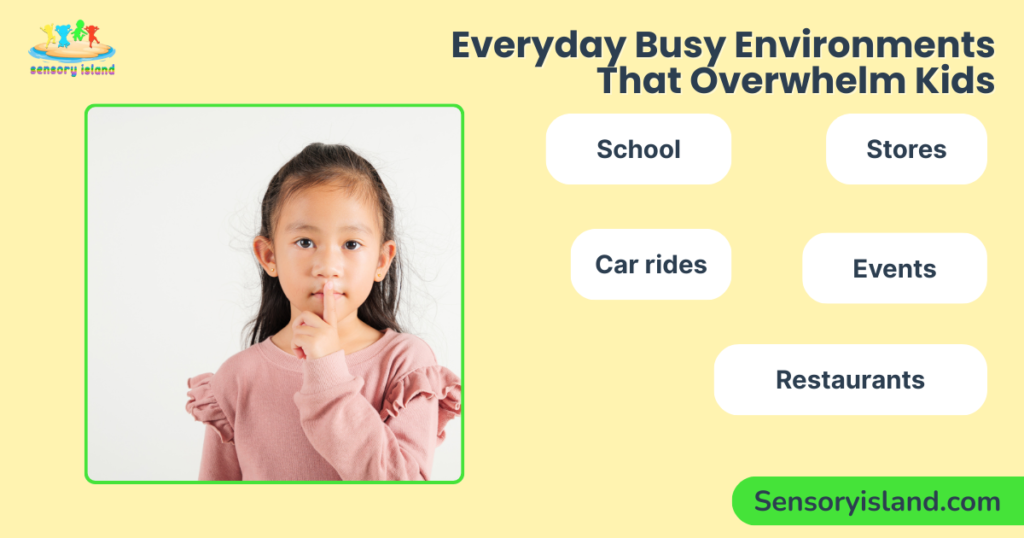
Busy environments aren’t just big cities. They’re part of daily life. Common sensory stressors include:
- Schools: Hallway noise, fluorescent lights, transitions, crowded classrooms
- Homes: Background TV noise, siblings playing, sudden changes
- Malls & Stores: Bright lighting, music, movement, unpredictable sounds
- Restaurants: Crowds, clinking dishes, strong smells, and close seating
- Car & Bus Rides: Traffic noise, vibration, motion, and tight spaces
- Movie Theaters & Events: Dark rooms, loud audio, large crowds. For many children, these inputs build quietly throughout the day. By evening, the nervous system is exhausted.
What Sensory Overload Can Look Like
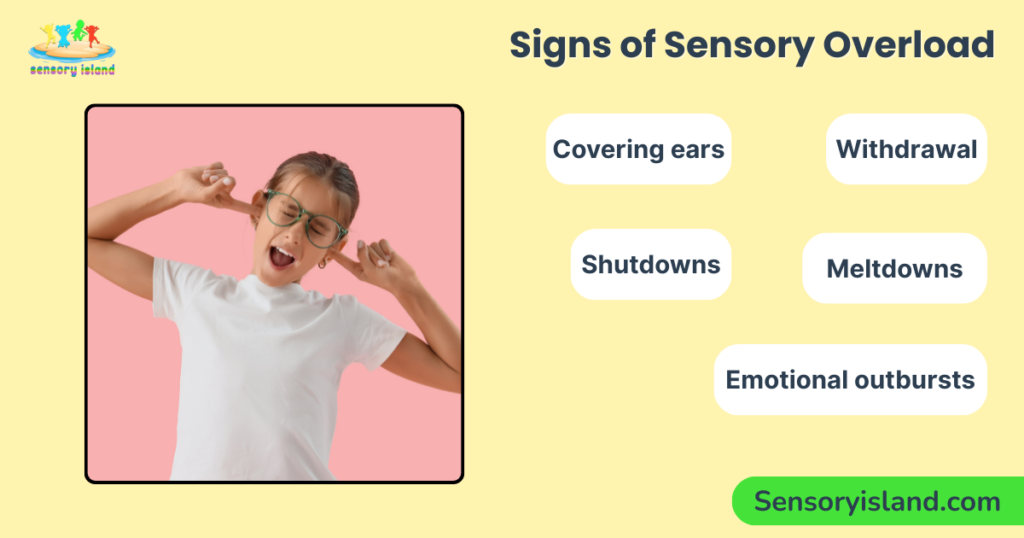
Sensory overload doesn’t look the same for every child. Some children may:
- Cover their ears
- Withdraw or become silent
- Cry suddenly
- Refuse to enter certain places
- Seems “fine” and then crashes later
These are signals, not problems. Understanding this shifts the response from correction to compassion.
Why Regulation Becomes Harder Over Time
In busy environments, children often spend the entire day coping instead of regulating. Coping means:
- Holding it together
- Pushing through
- Suppressing discomfort
Eventually, the body runs out of capacity. This is why many parents notice:
- After-school meltdowns
- Evening resistance
- Trouble sleeping
- Emotional outbursts after outings
The nervous system needs support before expectations.
What Regulation Support Can Look Like
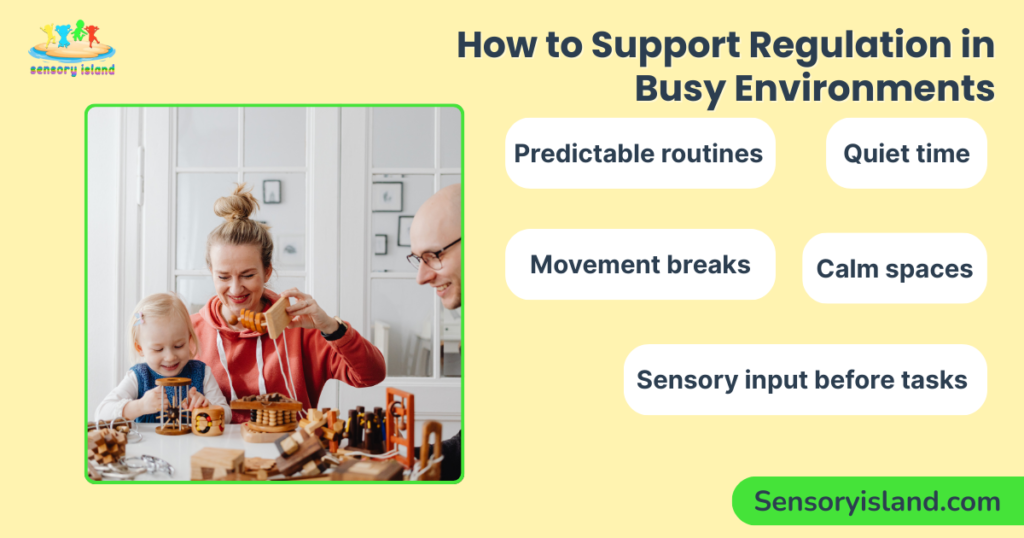
You don’t need to remove busy environments entirely. You can buffer the nervous system. Helpful supports include:
- Predictable daily routines
- Movement breaks between activities
- Quiet time after school
- Sensory input before demanding tasks
- Calm spaces to reset
Small changes reduce nervous system stress.
Why Sensory-Friendly Spaces Matter
In a world that rarely slows down, sensory-friendly environments act as a reset. These spaces offer:
- Softer lighting
- Reduced noise
- Clear layouts
- Safe movement
- Predictability
For sensory-sensitive children, these environments allow the nervous system to exhale.
How Regulation Builds Confidence
When children feel safe:
- They explore more
- They communicate more
- They try new things
- They build independence
Regulation does not create dependence. It creates confidence.
Sensory Island: A Regulation-First Space on Long Island
Sensory Island, opening Spring 2026 in Deer Park, Long Island, is being designed as a regulation-first, sensory-friendly space for families navigating busy everyday life. Modern environments bring constant stimulation. Sensory Island is intentionally built to offer:
- Calm
- Predictability
- Safety
- Support for sensory-sensitive and neurodivergent children
It reflects a growing understanding that children do not need more stimulation; they need balanced environments.
Key Takeaway
Busy environments don’t mean something is wrong with your child. They mean your child’s nervous system needs support. When we prioritize regulation, calm, and safety, children can move through the world with more confidence, even when the world feels loud.
Final Thoughts for Parents
You are not imagining it. Modern life is intense. Supporting your child’s nervous system is not limiting them. It’s helping them feel safe enough to grow. When children feel safe in their bodies, they can meet the world with bravery.