
Many parents ask similar questions:
“Why can’t my child focus today?”
“Why does learning feel harder some days than others?”
“Why do meltdowns happen before schoolwork even begins?”
Often, the answer is not effort, discipline, or intelligence. It’s a regulation. Before a child can listen, learn, or connect, their body needs to feel calm and safe. This is especially true for sensory-sensitive and neurodivergent children, whose nervous systems often work harder in busy, unpredictable environments. In this guide, we explain what regulation really means, why it comes before learning, and how parents can support it gently at home, at school, and in sensory-friendly spaces.
What Does “Regulation” Really Mean?
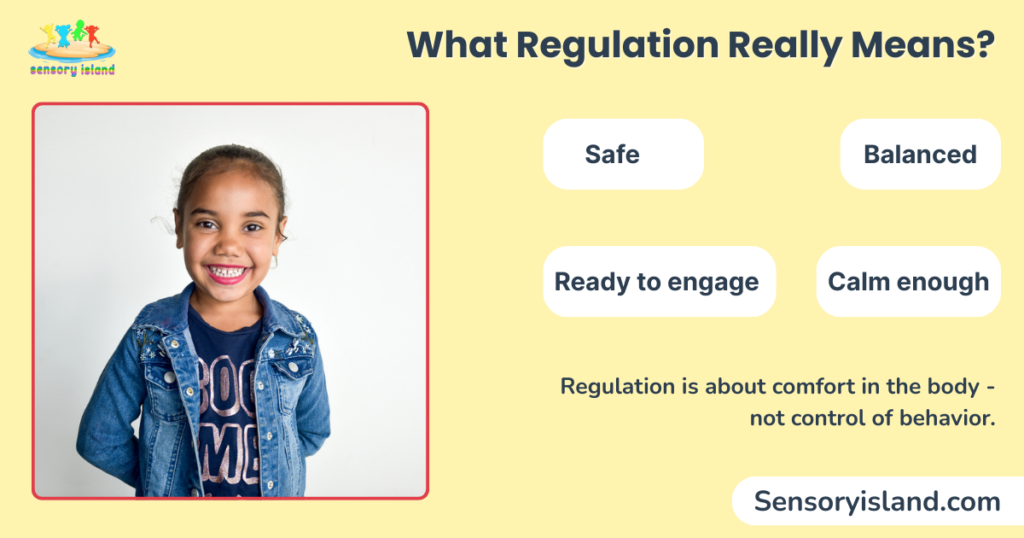
Regulation means the body feels:
- Safe
- Calm enough
- Balanced
- Ready to engage
A regulated child is not perfectly still or silent. They are comfortable in their body. When a child is dysregulated, their nervous system is in a state of protection. The brain focuses on staying safe rather than learning new information. This is not a behavior problem. It is a body response.
Why Learning Can’t Happen Without Regulation?
The brain’s first job is safety. When the nervous system senses danger, loud sounds, bright lights, too much movement, or sudden changes, learning takes a back seat. For many sensory-sensitive and neurodivergent children, everyday environments can feel:
- Too loud
- Too fast
- Too bright
- Too unpredictable
When this happens:
- Focus drops
- Instructions feel overwhelming
- Emotions rise quickly
- Meltdowns or shutdowns may occur
This isn’t defiance or refusal. It’s the body asking for support.
Regulation Comes Before Learning, Not After
Many adults try to fix learning first:
- Sit still.
- Pay attention.
- Try harder.
But the body needs help before the brain can respond.
When regulation comes first:
- Stress hormones decrease
- The nervous system settles
- The brain becomes more flexible
- Learning becomes possible
This is why sensory play, movement, and calm spaces are not extras. They are foundations.
What Dysregulation Can Look Like
Dysregulation does not look the same for every child. Some children may:
- Have big emotional reactions
- Avoid tasks or situations
- Become very active or restless
- Withdraw or shut down
- Seems “uncooperative”
These behaviors are signals, not problems. Understanding this helps parents respond with compassion instead of frustration.
What Regulation Before Learning Looks Like in Real Life
Regulation is not a theory. It shows up in everyday moments.
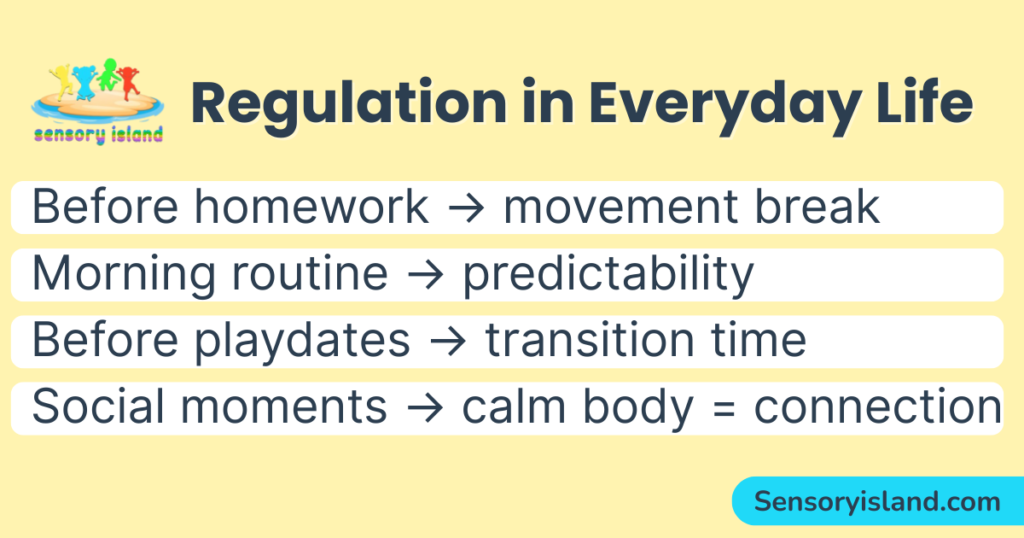
Before homework: A short movement break or sensory activity can help the body settle before sitting down.
Before school mornings: Predictable routines and calm transitions reduce stress before learning even begins.
Before therapy or playdates: Allowing time to adjust helps children enter activities with more confidence.
Before social situations: A calm body makes communication and connection easier.
Regulation is preparation, not delay.
How Sensory Input Supports Regulation
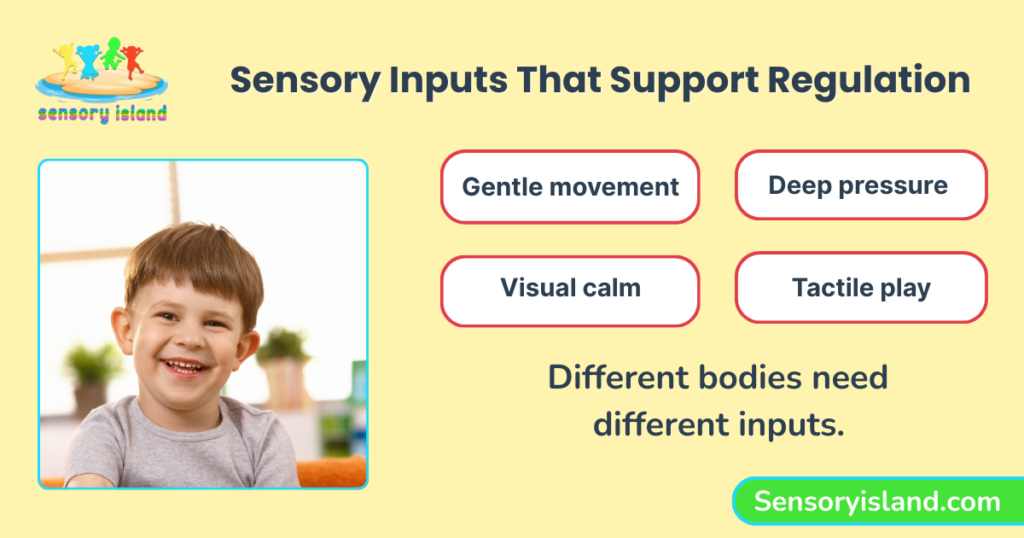
Sensory input helps the nervous system find balance. Different children need different kinds of input, such as:
- Gentle movement (swinging, rolling, slow jumping)
- Deep pressure (hugs, weighted items, resistance play)
- Visual calm (soft lighting, slow visuals)
- Tactile play (clay, sand, water, textures)
This is why sensory play supports regulation before learning — it helps the body first.
Regulation Is Not the Same as Discipline
This is an important distinction.
- Discipline teaches rules and boundaries.
- Regulation supports the nervous system so the child can follow those rules.
A dysregulated child cannot “try harder.” They need support before correction. Regulation and discipline work best together, not in opposition.
Calm Does Not Mean Quiet or Still
One of the biggest myths is that calm means silence. For some children:
- Gentle movement is calming
- Fidgeting helps focus
- Rocking or pacing brings balance
Regulation looks different for every nervous system. The goal is not control. The goal is comfort.
How Regulation Needs Change With Age
Regulation needs are not static.
Toddlers: Need movement, predictability, and simple sensory input.
Preschoolers: Benefit from routines, sensory breaks, and choice.
Early school-age children: Often need help balancing expectations with sensory support.
Understanding this helps parents adjust their support instead of blaming the behavior.
How Parents Can Support Regulation at Home
You do not need expensive tools or special equipment. Simple supports include:
- Predictable routines
- Calm-down corners
- Sensory breaks before learning
- Gentle transitions between activities
- Allowing movement during tasks
Small changes can make a big difference.
Why Environment Matters So Much (Especially in NYC)
Busy cities like New York bring constant sensory input:
- Noise
- Crowds
- Bright lights
- Fast movement
For sensory-sensitive children, this can be exhausting. That’s why sensory-friendly environments matter. Spaces designed with calm, predictability, and safety allow children to regulate naturally.
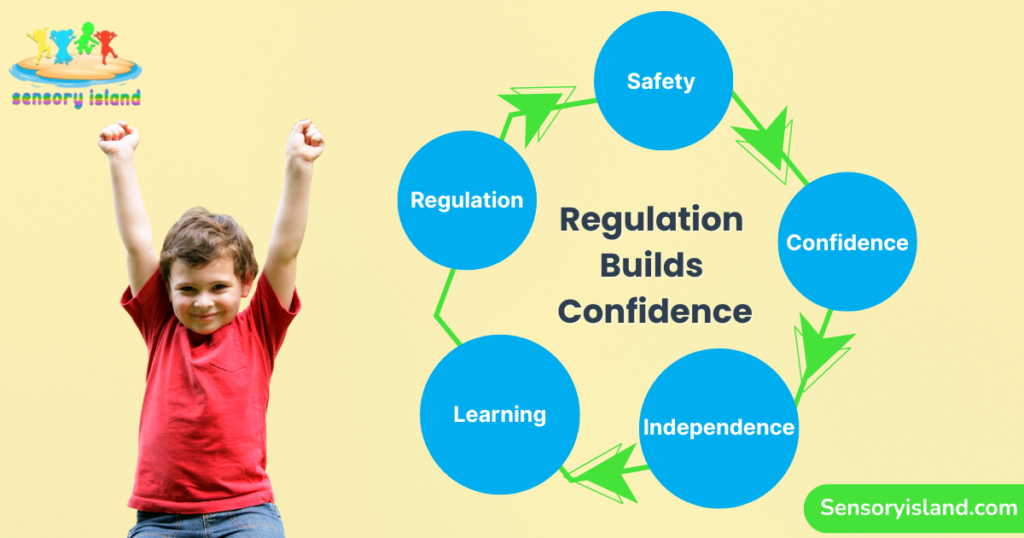
Regulation Builds Confidence, Not Dependence
Supporting regulation does not make children weak. It helps them become:
- More confident
- More independent
- More willing to try
- More open to learning
When children feel safe, they feel brave.
Sensory Island: A Regulation-First Space for Families
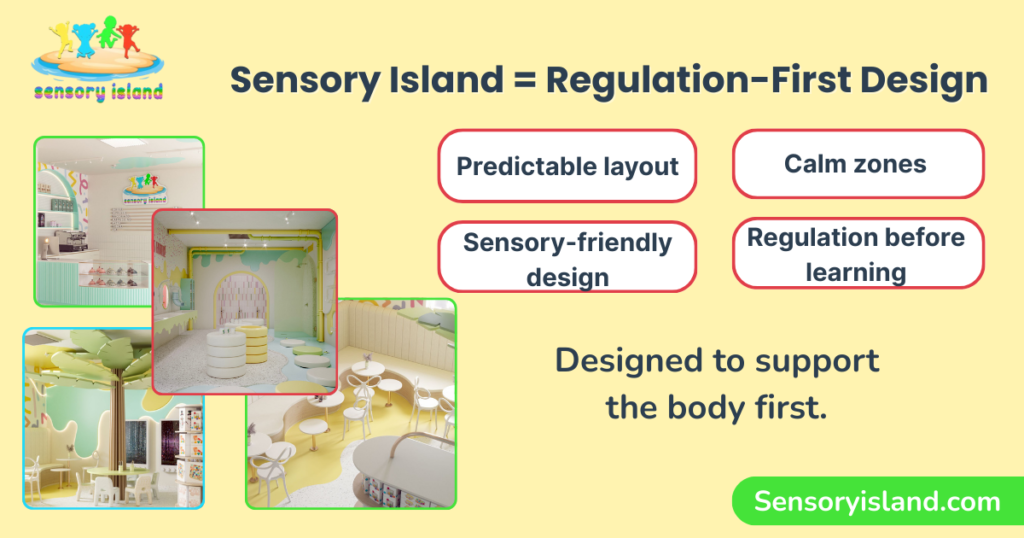
Sensory Island, opening Spring 2026 at Tanger Outlets, Deer Park, NY, is being designed with one guiding belief:
Regulation comes before learning. The space is created to support sensory-sensitive and neurodivergent children through calm design, predictable layouts, and sensory-friendly zones that help children feel safe in their bodies.
Final Thoughts: Learning Begins With Safety
Before worksheets. Before instructions. Before expectations.
Children need regulation.
When the body feels safe, the brain opens up. Learning becomes something children can enjoy — not fear. Supporting regulation is not lowering standards. It is meeting children where they are.